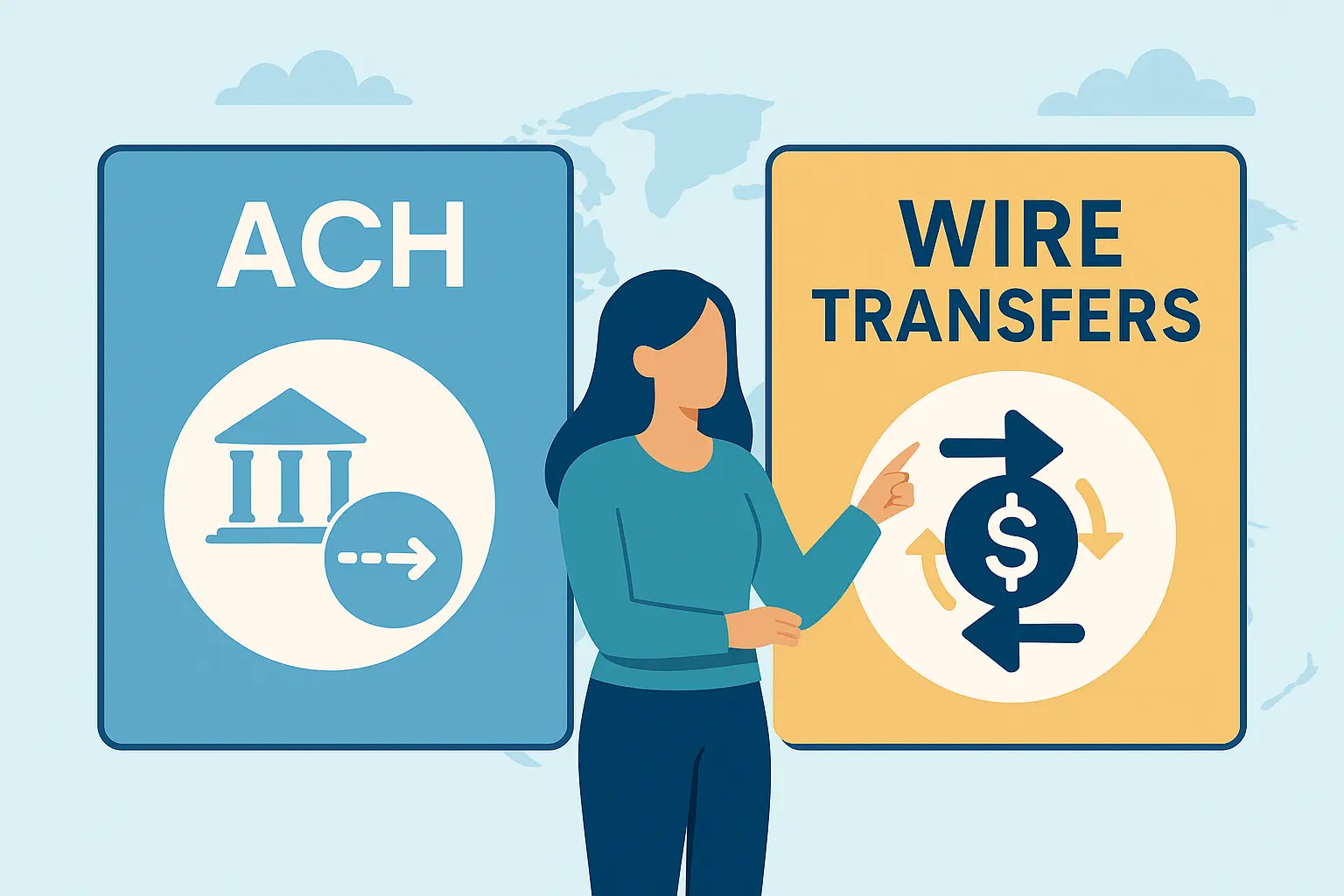
ACH transfers and wire transfers both move money between bank accounts, but they operate on completely different systems. Understanding how each works helps explain differences in speed, cost, and reliability.
Quick answer: ACH transfers are slower, low-cost payments processed in batches, while wire transfers are fast, real-time payments settled individually. ACH is best for routine transfers, while wires are used when speed is critical.
This guide breaks down how each method works, how long they take, what they cost, and when one is better than the other.
What Is an ACH Transfer?
An ACH transfer (Automated Clearing House) is an electronic bank-to-bank payment processed through a centralized clearing network. It is commonly used for direct deposits, bill payments, and everyday transfers between accounts.
ACH is designed for efficiency and volume rather than speed. Transfers move in scheduled processing batches instead of in real time.
For a deeper explanation of this structure, see why ACH transfers are processed in batches.
How ACH Transfers Work
- You initiate the transfer through your bank or app
- Your bank submits the request to the ACH network
- The transfer is grouped into a processing batch
- The receiving bank accepts and posts the funds
How Long ACH Transfers Take
Most ACH transfers complete within 1–3 business days, depending on cutoff times, batch schedules, and bank policies.
Even when funds appear early, final posting often happens during overnight processing. Learn more in how banks post transactions overnight.
ACH Transfer Fees
ACH transfers are typically free for consumers. Most banks do not charge for standard ACH payments.
What Is a Wire Transfer?
A wire transfer sends money directly between banks using real-time settlement systems. Domestic wires typically move through Fedwire, while international wires use intermediary banking networks.
How Wire Transfers Work
- Your bank sends funds directly to the receiving bank
- The transfer is processed individually (not batched)
- The receiving bank credits the funds upon arrival
How Long Wire Transfers Take
Domestic wire transfers usually arrive the same business day if submitted before cutoff times. International wires typically take 1–3 business days depending on routing and intermediaries.
Wire Transfer Fees
- Outgoing domestic wires: $15–$35
- Incoming wires: $0–$20
- International wires: $25–$50+
Wire transfers prioritize speed but are usually the most expensive option.
ACH vs Wire Transfers: Key Differences
- Speed: ACH = 1–3 business days; Wire = same day
- Cost: ACH = usually free; Wire = higher fees
- Processing: ACH = batch-based; Wire = individual settlement
- Reversibility: ACH errors may be reversible; wires are usually final
- Best use: ACH for routine payments; wires for urgent transfers
Which Transfer Method Should You Use?
- Use ACH for recurring payments, payroll, bill pay, and non-urgent transfers.
- Use wire transfers when funds must arrive the same day or when timing is critical.
If speed matters, see how long bank transfers take across different methods.
How These Systems Affect Transfer Timing
The difference between ACH and wires comes down to how each system processes transactions.
ACH uses batch processing, which introduces delays but improves efficiency and reliability. Wire transfers use direct settlement, which increases speed but also cost and irreversibility.
These differences explain why some transfers appear pending or delayed. See why bank transfers show as pending for more details.
Related Guides
- Why ACH transfers are processed in batches
- Why banks post transactions overnight
- Available vs current balance explained
- How bank processing times work
Bottom Line
ACH and wire transfers serve different purposes. ACH is slower but low-cost and ideal for routine payments, while wire transfers are fast but expensive and best for urgent transactions.
Choosing the right method depends on how quickly the money needs to arrive and how much you are willing to pay for speed.
