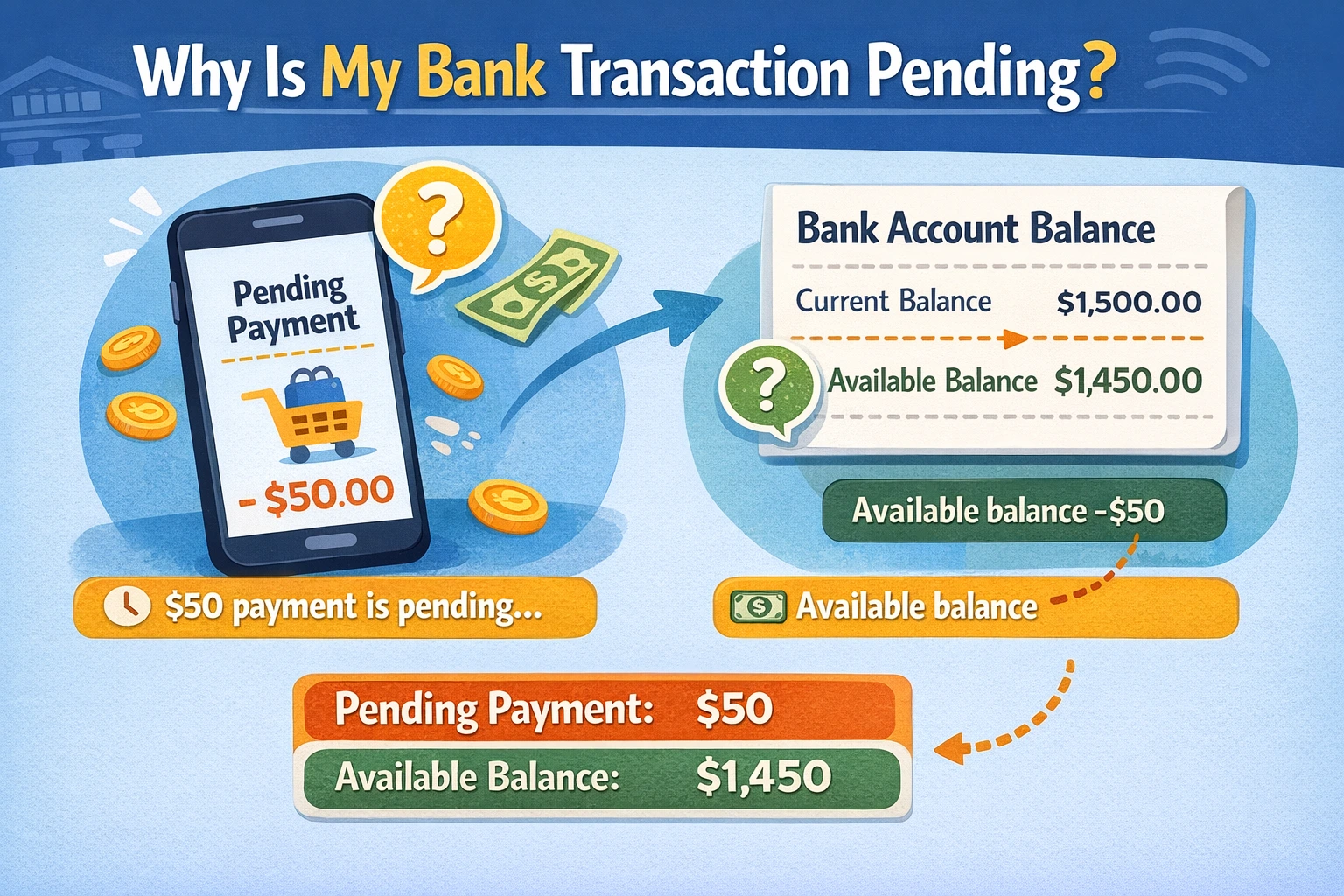
Quick answer: A pending bank transaction means the payment has been authorized but not fully processed yet. Most pending transactions clear within 1 to 3 business days, though some may take longer depending on the payment type, merchant timing, and bank processing schedules.
If you check your bank account and see a transaction marked pending, it can be confusing. The payment may appear in your account, but the money has not fully moved yet.
This guide explains why transactions stay pending, how long they take to clear, and what you can do if a transaction seems stuck.
If your account is not updating properly, you may also be dealing with bank app issues rather than a transaction delay.
What a Pending Transaction Means
A pending transaction means your bank has approved the payment, but the final settlement has not yet completed.
This usually happens after a purchase is authorized but before the merchant submits the final charge through the payment network.
During this time, the funds are temporarily reserved. That is why pending transactions reduce your available balance even though they have not fully posted.
See available balance vs current balance explained for a full breakdown.
How Long Pending Transactions Take
- Debit card purchases: Usually 1 to 3 business days
- ACH transfers: Typically 1 to 5 business days
- Mobile deposits: Often 1 to 3 business days
- Direct deposits: Same day or next business day
Most delays happen because banks process transactions in batches rather than in real time.
For a deeper explanation, see bank processing times and cutoff schedules.
Why Transactions Stay Pending
- Merchant delays: The business has not submitted the final charge
- Batch processing systems: Payments wait for scheduled clearing windows
- Security checks: Banks review transactions for fraud or unusual activity
- Weekend or holiday delays: Processing pauses outside business days
- Cutoff times: Late transactions process the next business day
Most modern banking systems do not process transactions continuously. Instead, payments are grouped into scheduled processing windows, which is why delays happen even when money appears to move instantly.
If your issue involves transfers, see why bank transfers get delayed and how ACH transfers work.
How Pending Transactions Connect to App Issues
Sometimes a transaction appears stuck because your banking app is not refreshing properly.
- The app may not update balances in real time
- Session timeouts can prevent data from refreshing
- Connection issues may delay transaction visibility
If your app is frozen or not updating, check why your banking app is stuck loading.
If you cannot access your account, review bank login problems and fixes.
For a full breakdown, see why banking apps stop working.
How To Fix a Pending Transaction
- Wait for the next business day processing cycle
- Avoid making duplicate payments
- Confirm the merchant completed the transaction
- Check your bank app for updates or alerts
- Contact your bank if the delay exceeds normal timelines
If your app keeps logging you out while checking transactions, see why banking apps keep signing you out.
Why Pending Transactions Affect Your Balance
Pending transactions reduce your available balance because the bank temporarily reserves those funds until settlement completes.
This prevents overspending while the transaction is still processing.
Why Pending Transactions Disappear
- The merchant cancels the authorization
- The authorization expires
- The final transaction replaces the pending one
This is normal behavior and part of how payment systems work.
Learn more in why pending transactions disappear.
Why Transactions Stay Pending Over the Weekend
Many banking systems pause processing during weekends and holidays.
ACH transfers especially may not resume until the next business day.
See weekend pending transactions explained.
When To Contact Your Bank
- The transaction is pending longer than 5 business days
- You see duplicate pending charges
- You do not recognize the transaction
If multiple features are not working, you may want to check if your bank is down.
Your bank can review and confirm the transaction status.
Related Banking Guides
- how long bank transfers take
- how ACH transfers work
- bank holds and deposit delays explained
- bank processing times and cutoff schedules
- why transactions post out of order
- why banks freeze transactions
- how banks detect suspicious deposits
- what time bank transfers process
Final Takeaway
Pending transactions are a normal part of modern banking. Most delays are temporary and caused by processing schedules rather than errors.
Understanding how transaction processing works makes it easier to interpret account activity and avoid unnecessary concern.
According to the Consumer Financial Protection Bureau, pending transactions typically resolve once the merchant submits the final payment and the banking network completes settlement.