What Happens If You Deposit $50,000 in Cash?

Quick answer: Depositing $50,000 in cash is legal, but the bank will report the transaction and may review it. If the money comes from a legitimate source, the deposit is usually processed without problems. Large cash deposits often raise questions because of how banks monitor and report transactions. This guide explains exactly what happens when … Read more
Is It Illegal to Carry Large Amounts of Cash?

Quick answer: It is not illegal to carry large amounts of cash in the United States. You can legally carry $10,000, $50,000, or more as long as the money was obtained legally. However, carrying large sums can attract attention from law enforcement and may lead to questioning depending on the situation. This guide explains what … Read more

What Is the $3,000 Bank Rule? (Myth vs Real Rule Explained)

This article is for informational purposes only and does not constitute legal or financial advice. If you have questions about reporting requirements, suspicious activity laws, or specific transactions, consult a qualified legal or financial professional. Quick answer: There is no universal law requiring banks to automatically report every $3,000 deposit. However, a real $3,000 threshold … Read more

How Do Banks Detect Suspicious Deposits?

Quick answer: Banks detect suspicious deposits by analyzing patterns, account behavior, deposit sources, and risk signals over time. They do not rely on a single dollar amount. Instead, they evaluate whether activity looks unusual compared to how the account is normally used. Most deposit monitoring is automated, but flagged activity may be reviewed by bank … Read more

How to Deposit a Large Cash Inheritance Safely

Quick answer: You can safely deposit a large cash inheritance by using your bank, keeping documentation of the source, and depositing the full amount at once. As long as the money is legitimate, depositing inherited cash is completely legal and commonly handled by banks. This guide explains exactly how to deposit a large cash inheritance, … Read more

What Time Do Bank Transfers Process? (ACH Cutoff Times + Overnight Updates)

Quick answer: Most bank transfers process several times during the business day, with many transactions finalizing overnight. ACH transfers run in batches, and funds often appear early in the morning after overnight settlement. Even though online banking feels instant, most transfers follow scheduled processing windows. This is why your money may not show up immediately … Read more

Why Is My Bank Transfer Taking So Long?

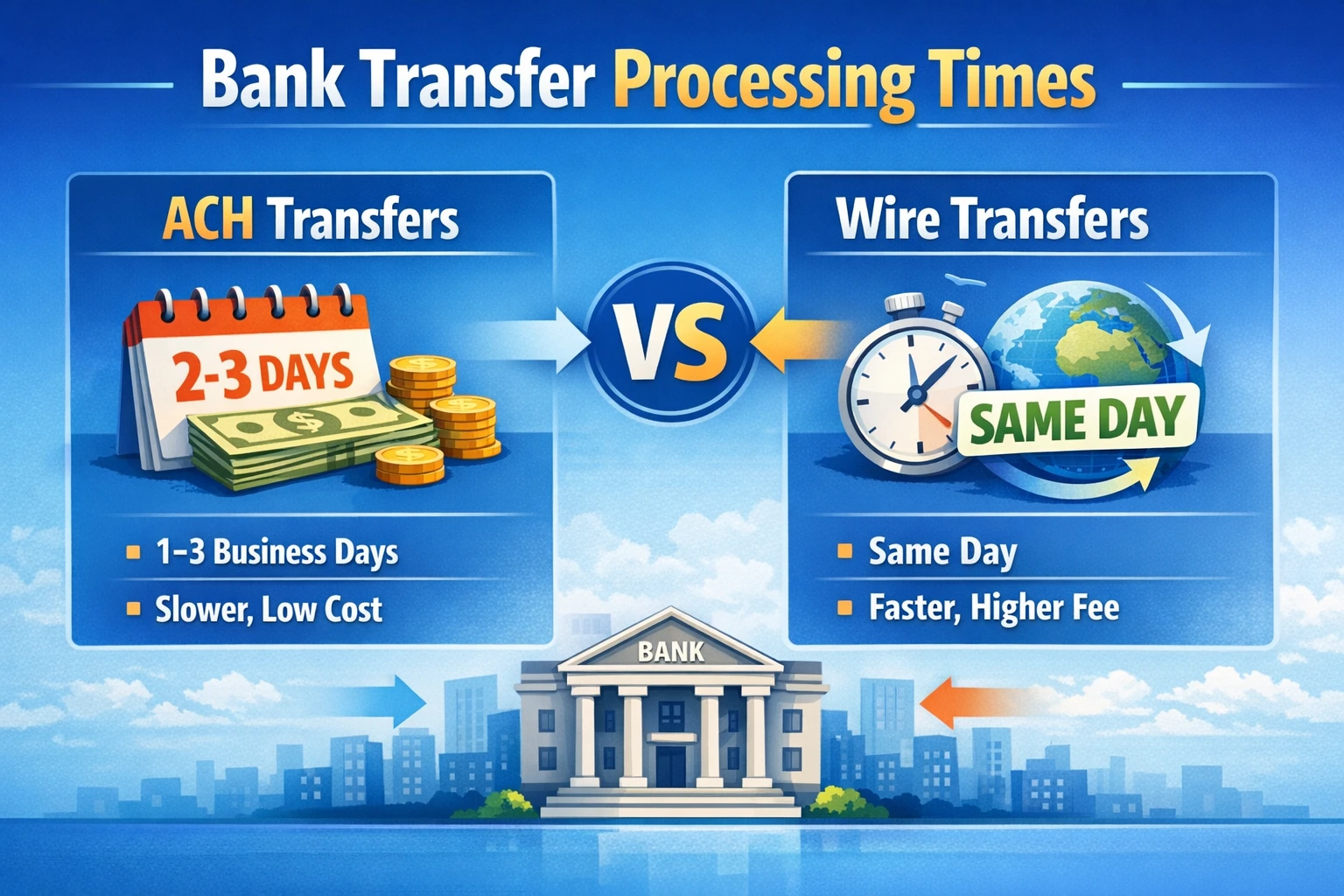
bank transfer processing times for ACH transfers vs wire transfers

Bank transfers are one of the most common ways to move money between accounts, but they do not always happen instantly. If a transfer appears to be taking longer than expected, it is usually because banks process many payments in scheduled batches rather than in real time. Understanding how these systems work can help explain … Read more

Why Is My Bank Transfer Pending Over the Weekend?

Quick answer: Bank transfers stay pending over the weekend because most banking networks — including the ACH system used for the majority of electronic transfers — only process transactions on business days. Transfers submitted Friday afternoon, Saturday, or Sunday enter a processing queue and begin moving Monday morning when banking settlement systems reopen. Most complete … Read more

Why Banks Freeze Transactions (Causes, Fixes, and How to Avoid It)

Last reviewed: May 2026 Quick answer: Banks freeze transactions when automated fraud detection systems identify activity that appears unusual, high-risk, or inconsistent with your normal account behavior. The transaction is temporarily paused while the bank verifies the payment, reviews security signals, and confirms the activity is legitimate before allowing the money to move. OnlineBankingHelp.com is … Read more