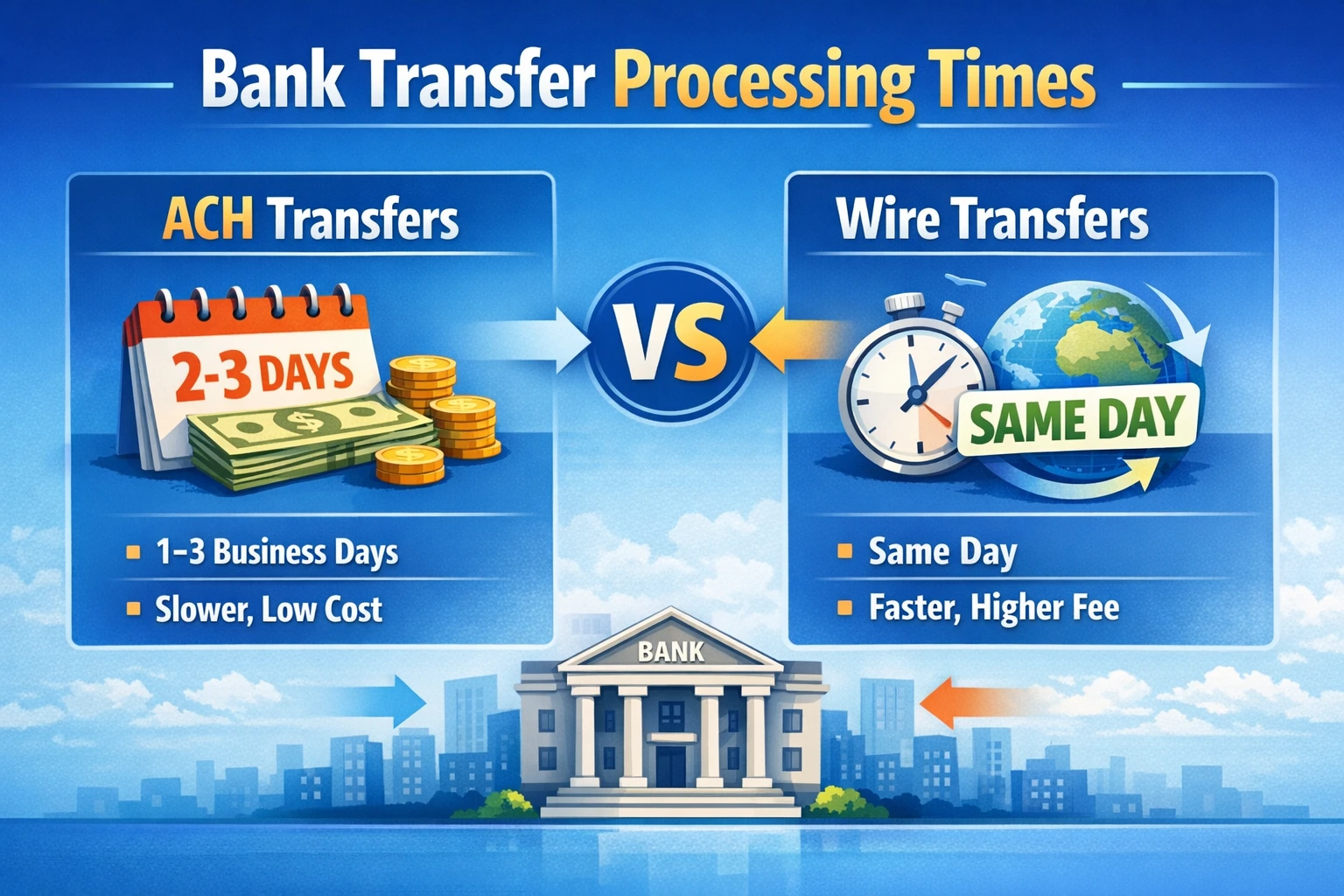
Bank transfers are one of the most common ways to move money between accounts, but they do not always happen instantly. If a transfer appears to be taking longer than expected, it is usually because banks process many payments in scheduled batches rather than in real time. Understanding how these systems work can help explain why transfers sometimes remain pending for several hours or even a few business days.
Why Bank Transfers Sometimes Take Longer Than Expected
If you recently sent money from one bank account to another and the transfer still shows as pending, you are not alone. Delayed transfers are one of the most common questions people have about online banking.
A bank transfer may take longer than expected because most transfers are processed in batches through the ACH network rather than instantly. Transfers sent after daily cutoff times, on weekends, or between different banks often take one to three business days to complete. Security reviews or incorrect account details can also delay a transfer.
Understanding how bank transfers work behind the scenes can help explain why some payments appear quickly while others take several days to complete. Most U.S. banks rely on the Automated Clearing House (ACH) network to process everyday transfers, which operates on scheduled processing cycles rather than real-time settlement.
To see the full lifecycle from initiation to settlement, see how bank transactions actually work.
Here is the short explanation most people are looking for.
Quick Answer
- Most bank transfers take 1 to 3 business days
- Transfers sent after the cutoff times may be processed the next business day
- Weekend and holiday transfers are usually delayed
- Banks may perform security checks on unusual transfers
- Incorrect account information can slow processing
How Bank Transfers Are Processed
Many people assume bank transfers move instantly between accounts, but most payments actually pass through several banking systems before funds arrive.
When a transfer is initiated, the sending bank verifies the request, confirms the account details, and sends the payment through a payment network. For most everyday transfers, this network is the ACH system used by banks throughout the United States.
ACH transfers are typically grouped into batches and processed during scheduled settlement windows throughout the banking day. Because of this batch-processing system, a transfer may remain pending until the next processing cycle.
If you want a deeper explanation of this system, our guide on how ACH transfers work explains the process most banks use.
Common Reasons Bank Transfers Take Longer
The Transfer Was Sent After the Daily Cutoff Time
Most banks have a daily cutoff time for processing transfers. Transfers submitted after that time may not begin processing until the next business day.
For example, if a transfer is sent late on Friday evening, it may not begin processing until Monday morning.
The Transfer Was Sent on a Weekend or Holiday
Bank payment systems usually operate only on business days. Transfers initiated during weekends or federal holidays typically wait until the next business day before processing begins.
This is why many transfers appear pending throughout the weekend. Our guide on why transfers stay pending over the weekend explains this in more detail.
Security or Fraud Checks
Banks use automated monitoring systems to review transfers for unusual activity. If a transfer triggers a security review, the bank may delay the transaction until it can verify the request.
Incorrect or Mismatched Account Information
Transfers can also be delayed if the receiving account information does not match the bank’s records. Even small errors in routing numbers or account numbers can slow down the process while banks verify the details.
Large Transfer Amounts
Banks sometimes apply additional verification procedures to larger transfers. These extra checks help reduce the risk of fraud or unauthorized transactions, but may extend processing time.
How Long Should a Bank Transfer Take?
The time required for a transfer depends largely on the payment method used.
| Transfer Type | Typical Processing Time |
|---|---|
| ACH transfer | 1 to 3 business days |
| Wire transfer | Same day if sent before cutoff time |
| Internal bank transfer | Immediate or within a few hours |
Transfers between different banks typically take longer because they must pass through payment networks before the receiving bank credits the funds.
For a more detailed breakdown, see our guide on how long bank transfers take.
If your transfer still shows as pending, see why a bank transfer may still be pending.
If you are waiting on a paycheck deposit, see what time direct deposit usually hits.
When a Delayed Bank Transfer Might Be a Problem
Most delays are normal, but occasionally a transfer may require additional attention.
- The transfer has not been completed after several business days
- The transfer shows completed, but the funds are missing
- The receiving account information may have been entered incorrectly
- Your bank contacts you for additional verification
Related Online Banking Guides
- How long bank transfers take
- Bank processing times explained
- Why bank transfers get delayed
- Why bank transactions stay pending
- How ACH transfers work
Frequently Asked Questions
Why is my bank transfer still pending?
A transfer usually stays pending while it moves through bank processing systems. Most ACH transfers take one to three business days to complete.
Can a bank transfer take longer than three days?
Yes. Transfers may take longer if they were sent late in the day, during weekends or holidays, or if the bank performs a security review.
Why do banks delay transfers?
Banks sometimes delay transfers to verify account information, review suspicious activity, or process payments through ACH batch settlement cycles.
What time do bank transfers process?
Most banks process transfers during scheduled settlement windows throughout the business day, with many payments posting overnight during banking processing cycles.
The Bottom Line
Bank transfers often take longer than people expect because most financial institutions process payments through scheduled networks rather than instantly.
In many cases, a transfer that appears pending is simply waiting for the next processing window. Transfers sent late in the day, during weekends, or between different banks typically take the longest to complete.
If a transfer has not completed after several business days, contacting your bank can help confirm the payment status and determine whether additional verification is needed.
