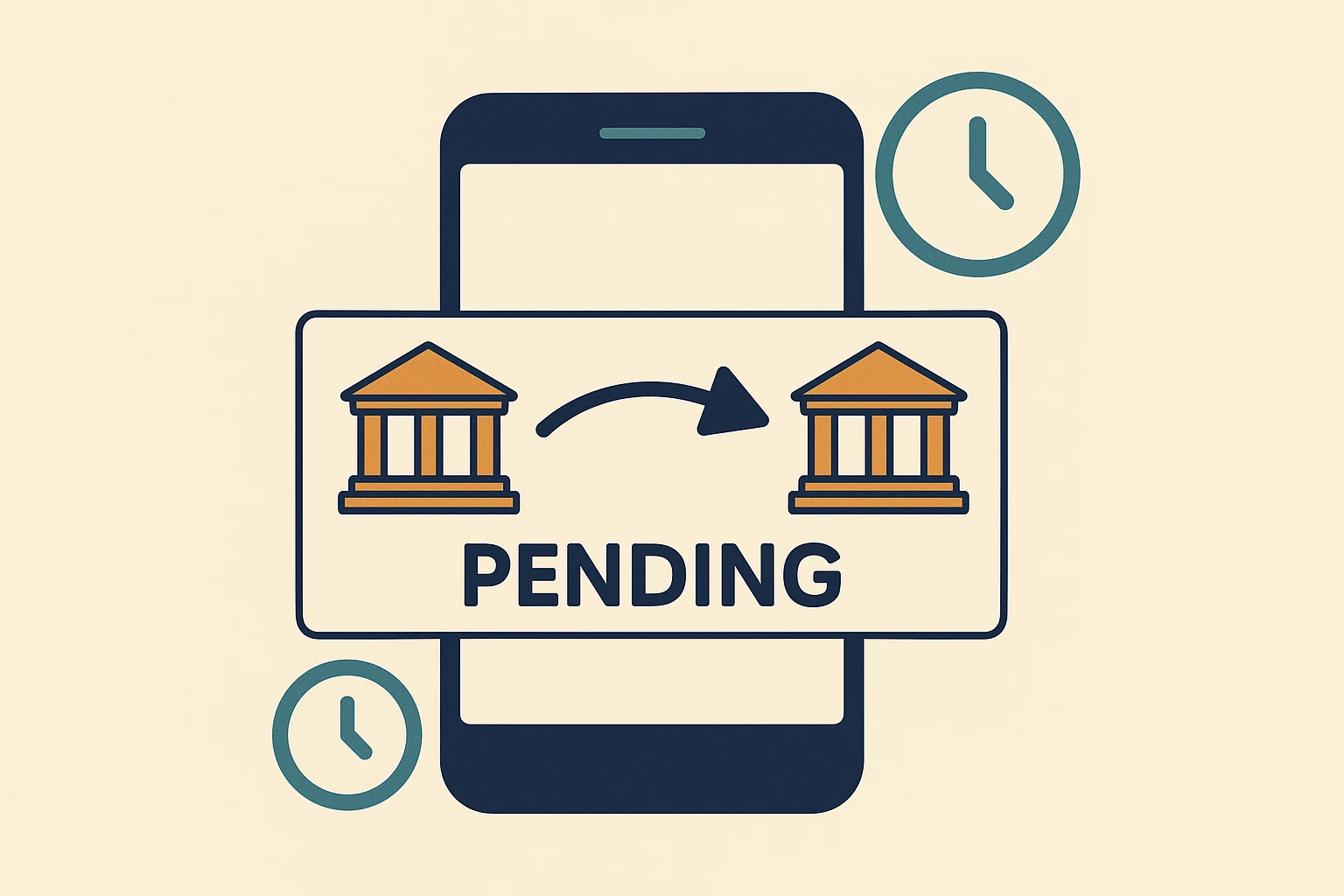
Bank transfers can take longer than expected for several reasons, including ACH network timing, bank verification reviews, incorrect account information, and weekend or holiday delays. This guide explains the most common causes of transfer delays and what you can do to reduce them.
OnlineBankingHelp.com is an independent educational resource and does not access accounts or provide account-specific support.
How bank transfers normally work
Most transfers sent between banks rely on the ACH network. ACH transfers are processed in scheduled batches rather than instantly, and banks follow defined posting and settlement cycles.
This means a transfer may be submitted successfully but not appear in your account until the next processing window completes.
Some transfers, such as internal transfers within the same bank, may post quickly. External bank-to-bank transfers typically take 1–3 business days, depending on cutoff times and verification.
For a deeper breakdown of cutoff times, batch processing, and settlement timing, see our bank processing times guide.
Common reasons bank transfers get delayed
Transfer delays usually occur because the sending or receiving bank needs additional time to verify or process the transaction. Common causes include:
- Weekends and holidays when ACH processing pauses
- Bank cutoff times that push transfers into the next business day
- Fraud prevention reviews triggered by new or unusual activity
- Incorrect or mismatched account information
- Large-dollar transfers requiring manual review
- New accounts with temporary limits or restrictions
- Delays from the sending bank in releasing funds
Even though ACH rules define settlement windows, banks often apply internal risk and verification checks before making funds fully available.
In some cases, the money is not missing but temporarily restricted. That process is explained in bank holds and funds availability.
How weekends and holidays affect transfers
The ACH network does not process transfers on weekends or federal holidays. Transfers submitted after a bank’s cutoff time or during non-processing days wait until the next business cycle begins.
- Transfers submitted late Friday may not post until Monday or Tuesday
- Holiday weeks commonly add 1–2 extra processing days
- After-hours transfers begin processing the next business day
This is why many transfers appear “stuck” over the weekend. For a focused explanation, see transfer pending over the weekend.
Posting behavior during these pauses is closely tied to overnight updates and settlement timing, which we explain in why banks post transactions overnight.
What a pending transfer actually means
A “pending” status usually means your bank has received the transfer request but has not completed posting. Common reasons include:
- Verification or security checks still in progress
- ACH settlement not yet completed
- Funds not released by the sending bank
- Posting scheduled for the next processing window
Pending does not automatically indicate a problem. In most cases, it reflects normal settlement and posting timing rather than an error.
If timing is critical and ACH is too slow, you may want to explore alternatives covered in instant transfers and real-time payments.
How to reduce bank transfer delays
While ACH schedules cannot be bypassed entirely, these steps can help reduce delays:
- Submit transfers early in the business day
- Avoid weekends and holidays for time-sensitive transfers
- Double-check routing and account numbers
- Verify linked external accounts in advance
- Use direct deposit for recurring payments
- Schedule transfers mid-week when processing volume is smoother
If a delay occurs because you cannot access your account, our online banking login error fixes guide may help you regain access quickly.
