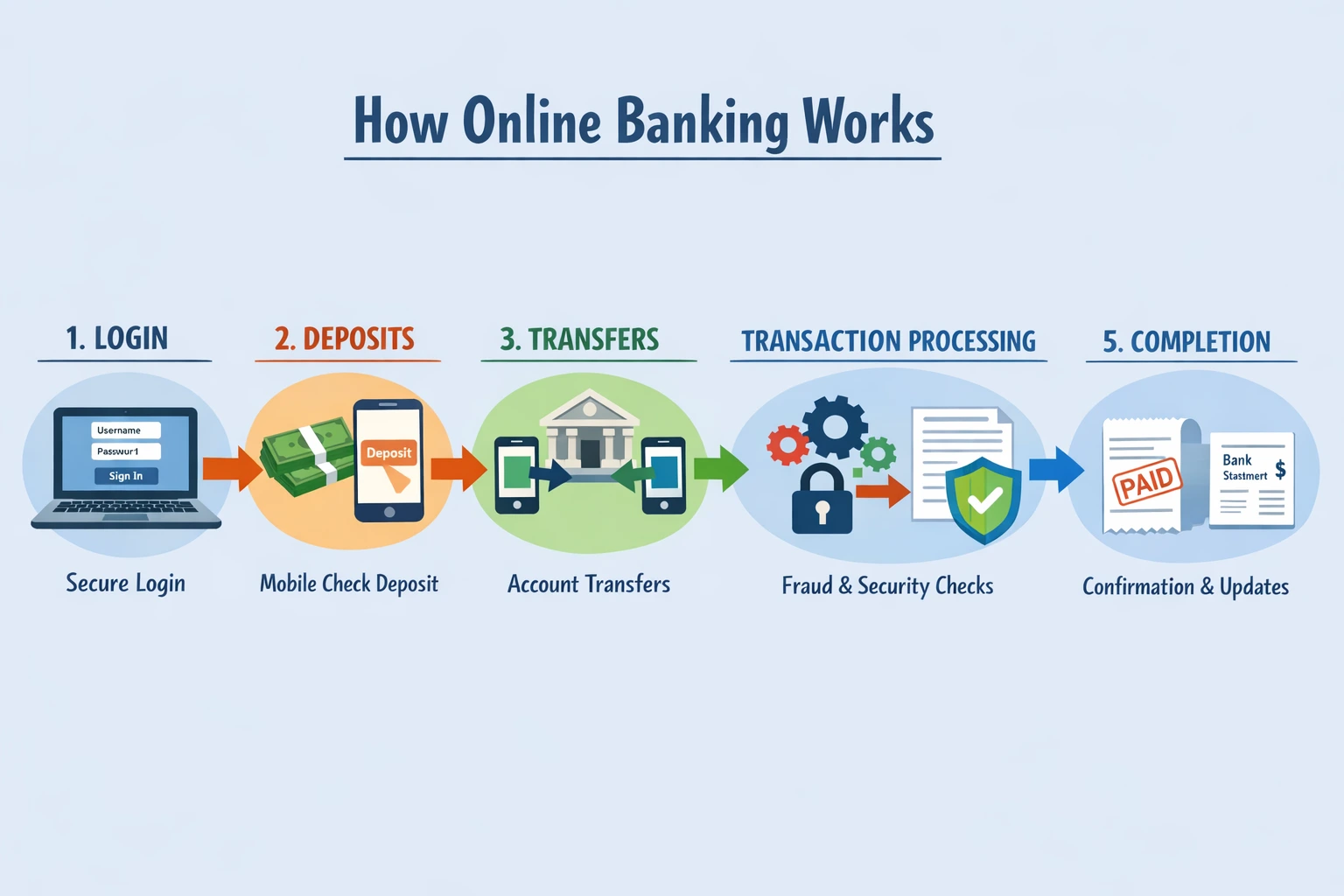
Online banking allows customers to manage bank accounts, move money, deposit checks, and review transactions through secure websites and mobile apps. Instead of visiting a physical branch, most everyday banking tasks can now be completed digitally.
If you are new to digital banking, you may want to start with our guides explaining what online banking is and online banking basics. This page explains what happens behind the scenes when you log in, move money, or complete transactions using online banking.
Although online banking appears instant, most transactions follow structured processing timelines. If you want a deeper breakdown, see our guides on bank processing times and why transactions stay pending.
Quick Answer: How Online Banking Works
- You log in securely using your credentials and verification methods
- Your bank connects to internal systems and payment networks
- Transactions are authorized and sent through networks like ACH
- Funds are verified before becoming fully available
- Your balance updates after final settlement is complete
These systems work together to process deposits, transfers, and payments securely. Most transactions move through networks like ACH before they fully settle.
While online banking feels instant, most activity happens in multiple steps behind the scenes.
How Logging Into Online Banking Works
When you sign in to your bank account through a website or mobile app, the system verifies your identity using secure authentication tools. These typically include your username, password, and sometimes additional verification such as a one-time security code.
If login problems occur, they are often related to incorrect credentials, security locks, or temporary technical issues. Our guide on fixing common bank login errors explains the most common causes.
If you are looking for login instructions for a specific financial institution, you can browse our bank directory or credit union directory.
How Online Banking Handles Deposits
Online banking systems allow deposits through several methods including direct deposit, electronic transfers, and mobile check deposit.
Mobile deposits allow customers to photograph a check and submit it through their banking app. The bank then reviews the image, verifies the check information, and begins the clearing process. You can learn more in our mobile check deposit guide.
Banks sometimes place temporary holds on deposits while funds are verified. These holds help prevent fraud and returned payments. Our guide on bank holds explained covers why this happens.
If you have ever wondered why deposits take time to appear in your account, our article explaining why bank deposits take so long breaks down the process.
How Bank Transfers Work
Most online transfers between banks are processed through the Automated Clearing House (ACH) network. This network connects thousands of banks and credit unions across the United States.
ACH transfers typically move in batches rather than instantly, which is why many bank transfers take one to three business days. Our ACH transfer guide explains how these payments move between financial institutions.
Some banks now offer faster payment options as well. To understand the differences between transfer types, see our guide comparing ACH vs wire transfers and our overview of instant bank transfers.
For a deeper explanation of how ACH networks operate, read our article explaining how ACH transfers work.
Why Transactions Appear as Pending
Many transactions appear as pending before they fully post to your account. Pending transactions represent payments that have been authorized but not fully settled.
This commonly happens with debit card purchases, online transfers, and deposits that require verification.
If you want to understand why this occurs, our guide on why bank transactions stay pending explains the process.
Transfers can also remain pending over weekends or holidays when banks are closed. Our article on pending transfers over weekends explains why delays occur.
Is Online Banking Instant?
Online banking often feels instant, but most transactions are not truly real-time. Transfers, deposits, and payments usually go through verification steps and batch processing before final settlement.
This is why some transactions appear pending or take one to three business days to complete, even though they were initiated immediately.
How Banks Track Transactions and Balances
Online banking platforms display both a current balance and an available balance. These numbers can differ depending on pending transactions, deposit holds, or scheduled payments.
If you have noticed differences between balances, our guide explaining available balance vs current balance shows how banks calculate each amount.
Transactions may also post overnight while banks complete their daily processing cycle. Our guide on bank processing times explains why many updates occur after midnight.
Why Banking Apps Sometimes Stop Working
Mobile banking apps rely on secure connections between your device and your bank’s systems. If servers experience outages, updates, or connectivity issues, the app may temporarily stop working.
Our guide explaining why banking apps stop working covers the most common reasons this happens.
How Routing Numbers Fit Into Online Banking
Routing numbers identify the financial institution involved in a transaction. They are used for ACH transfers, direct deposits, and wire transfers.
You can find routing numbers for major banks and credit unions in our routing numbers directory. For a detailed explanation of routing numbers and how they work, visit our routing number glossary page.
Why Online Banking Is Now the Standard
Online banking has become the primary way many people interact with their financial institutions. Customers can check balances, move money, deposit checks, and manage payments from almost anywhere.
Although the systems behind online banking are complex, they are designed to make everyday banking faster, safer, and more convenient.
If you want to explore additional banking terms and concepts, visit our banking glossary for simple explanations of common financial terminology.
Frequently Asked Questions
- Is online banking safe? Yes, most banks use encryption and multi-factor authentication to protect accounts.
- Why are online transactions not instant? Many transactions go through verification and batch processing before settlement.
- Can I use online banking without a branch? Yes, many banks operate fully online without physical locations.